Saint Paul Island Alaska Photography Tour 2027 | Christopher Dodds
July 1-8, 2027 ONLY 1 SPOT LEFT!
July 2-9, 2028 JUST ANNOUNCED!
8 Days / 7 Nights — USD $13,995 Single Occupancy
Includes lodging, meals, ground transportation on Saint Paul Island, expert guiding and personalized photographic instruction.Double Occupancy — USD $26,204 total for two photographers sharing a room (USD $13,102 per person).
Anchorage–Saint Paul airfare is not included. A block of seats has been reserved for our group on the Anchorage–Saint Paul Island flights.
Seven full days of personalized, in-the-field photographic instruction with Christopher Dodds, with an emphasis on helping you consistently create stronger images in changing light, weather, and field conditions.
Dates chosen from more than 35 visits to Saint Paul Island. After photographing Saint Paul from spring through summer for decades, I have found early July to consistently offer an exceptional combination of peak nesting activity, species diversity, and birds in beautiful breeding plumage.
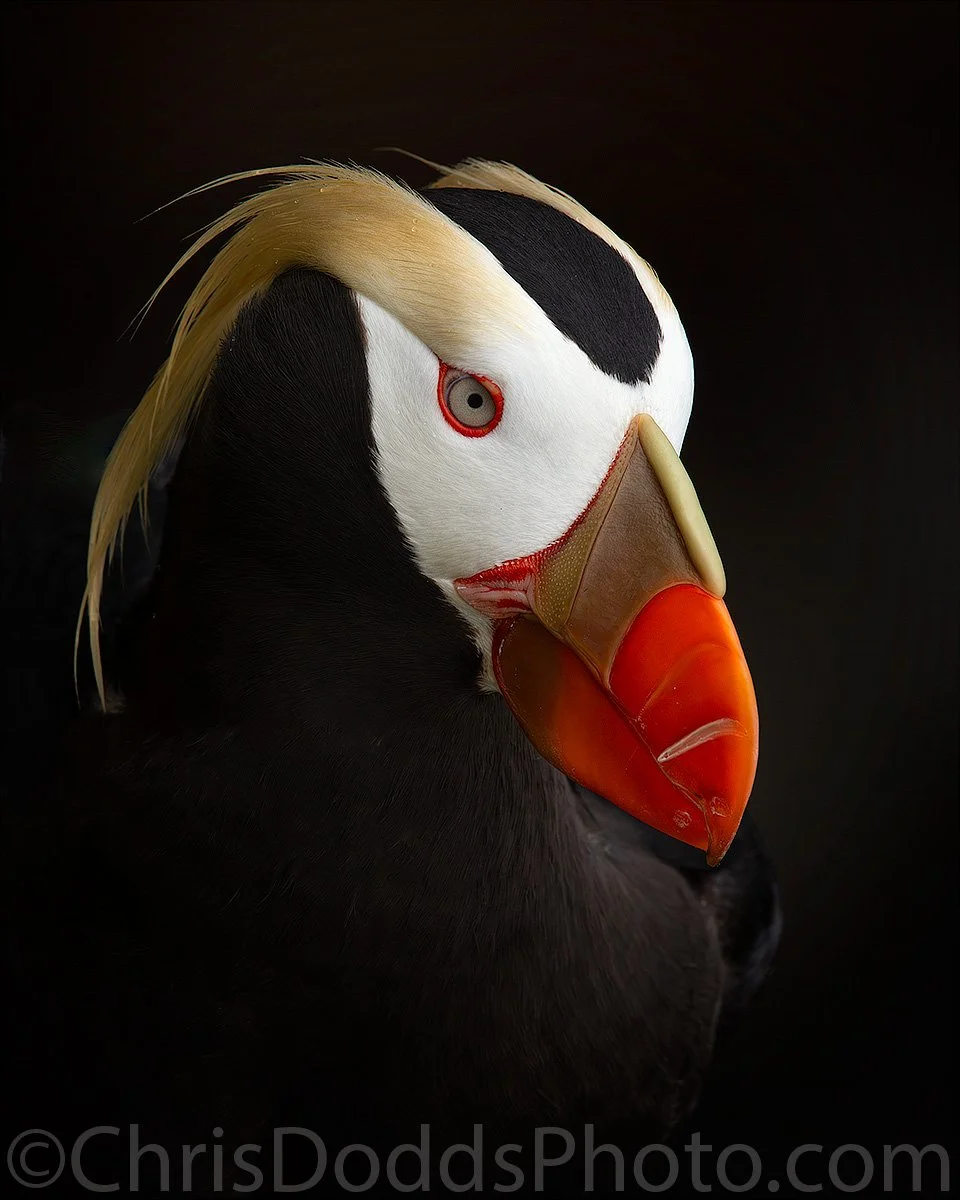
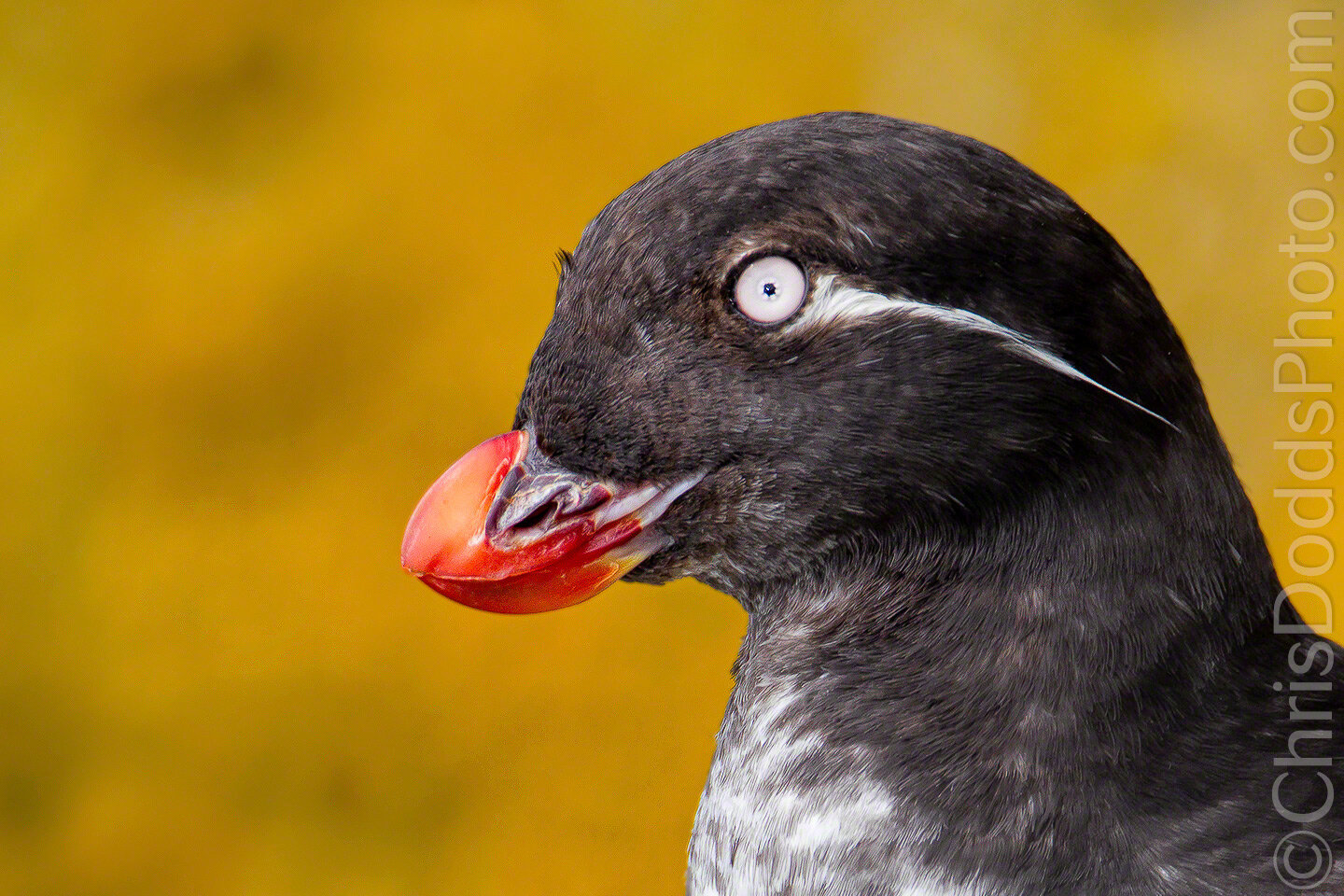
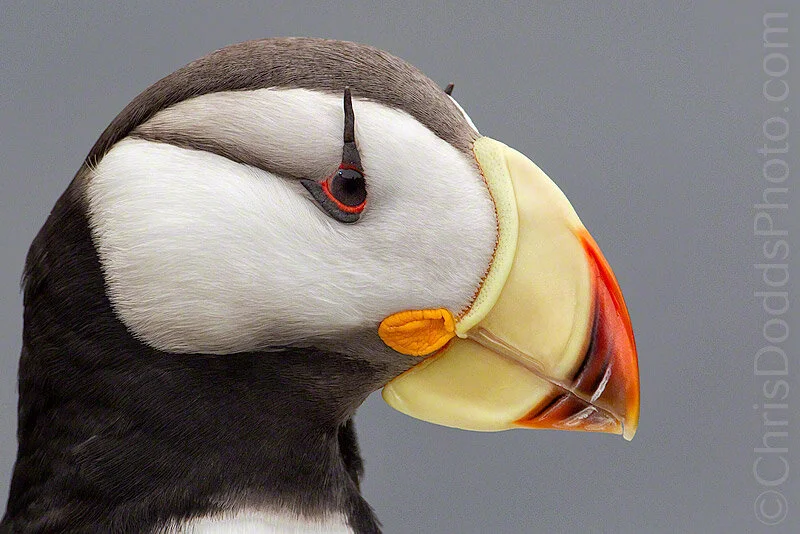
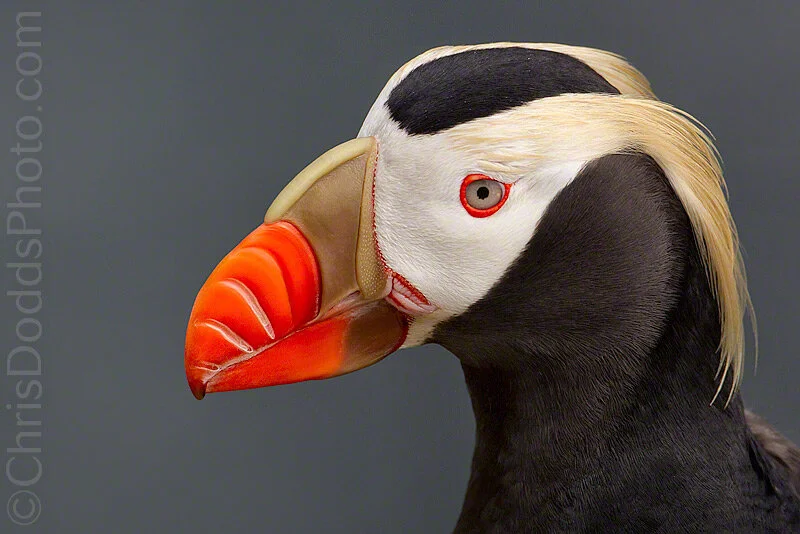
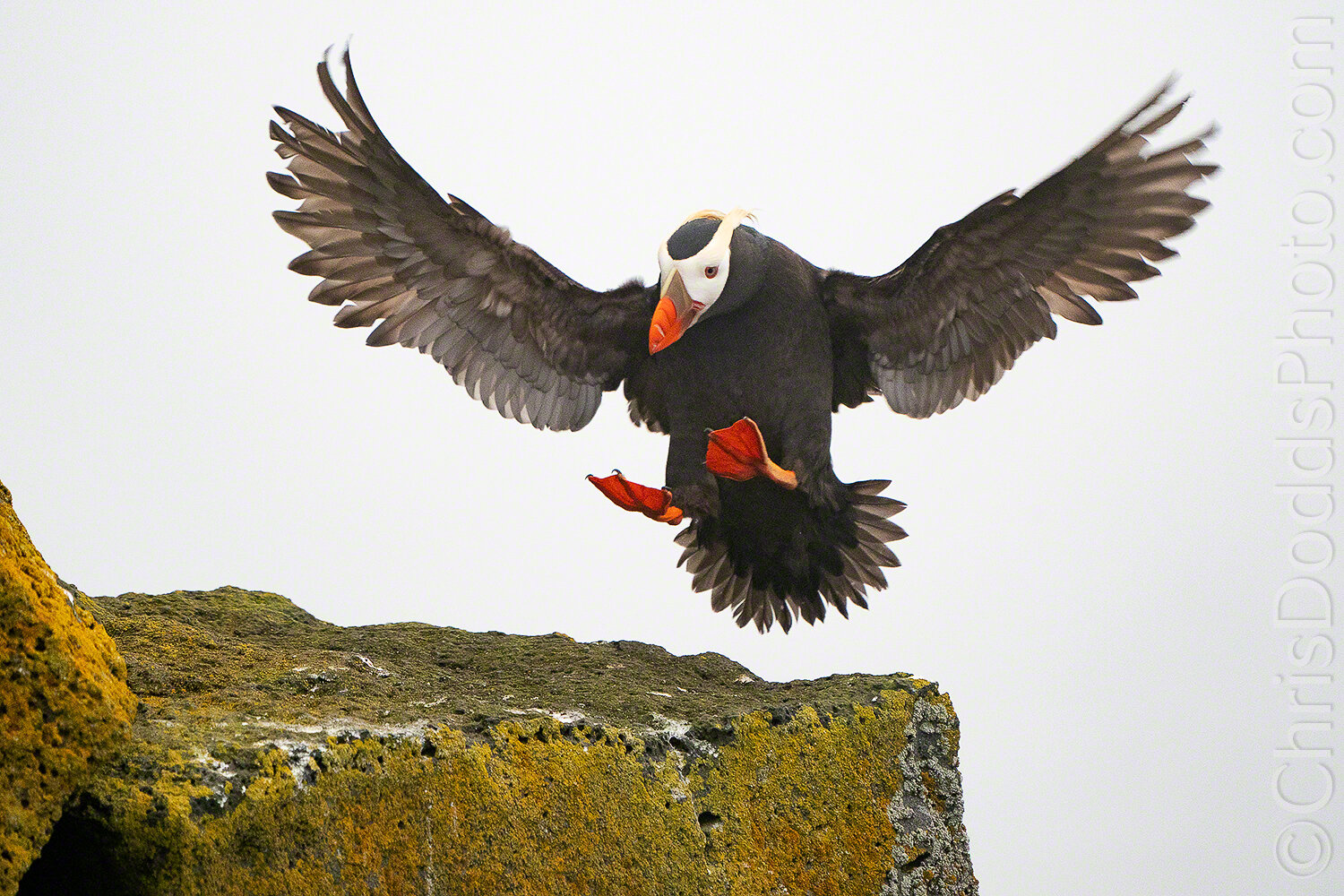
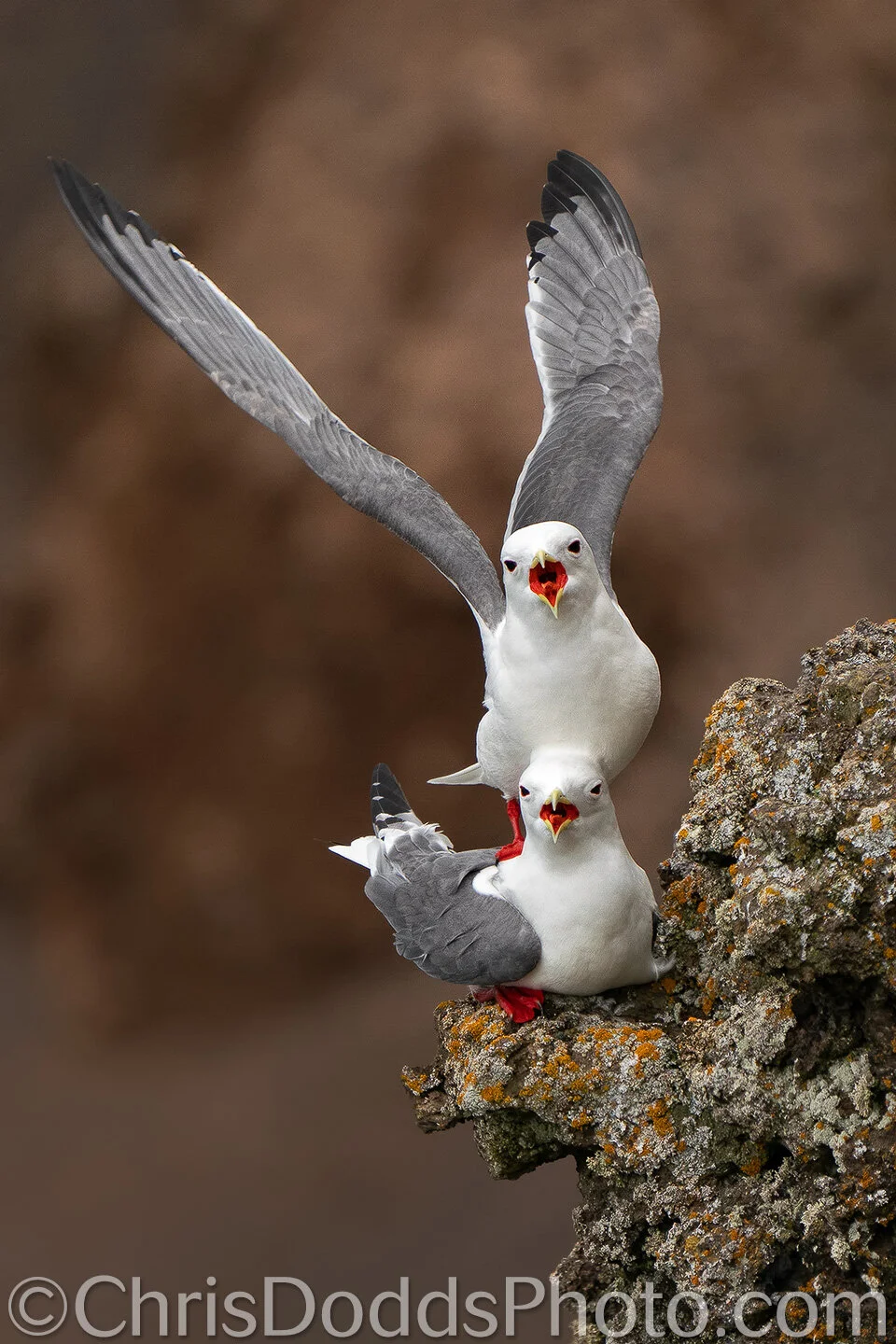
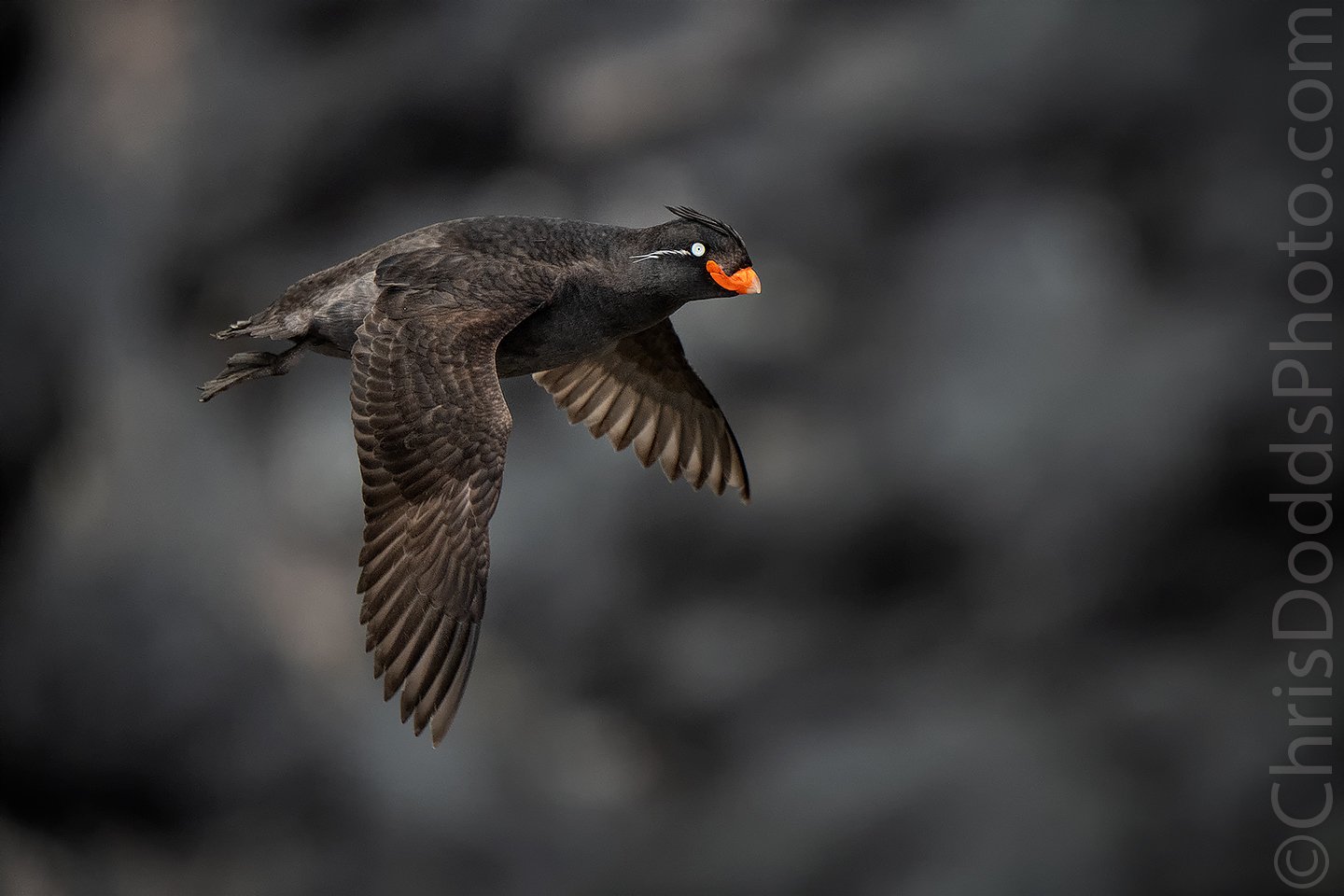
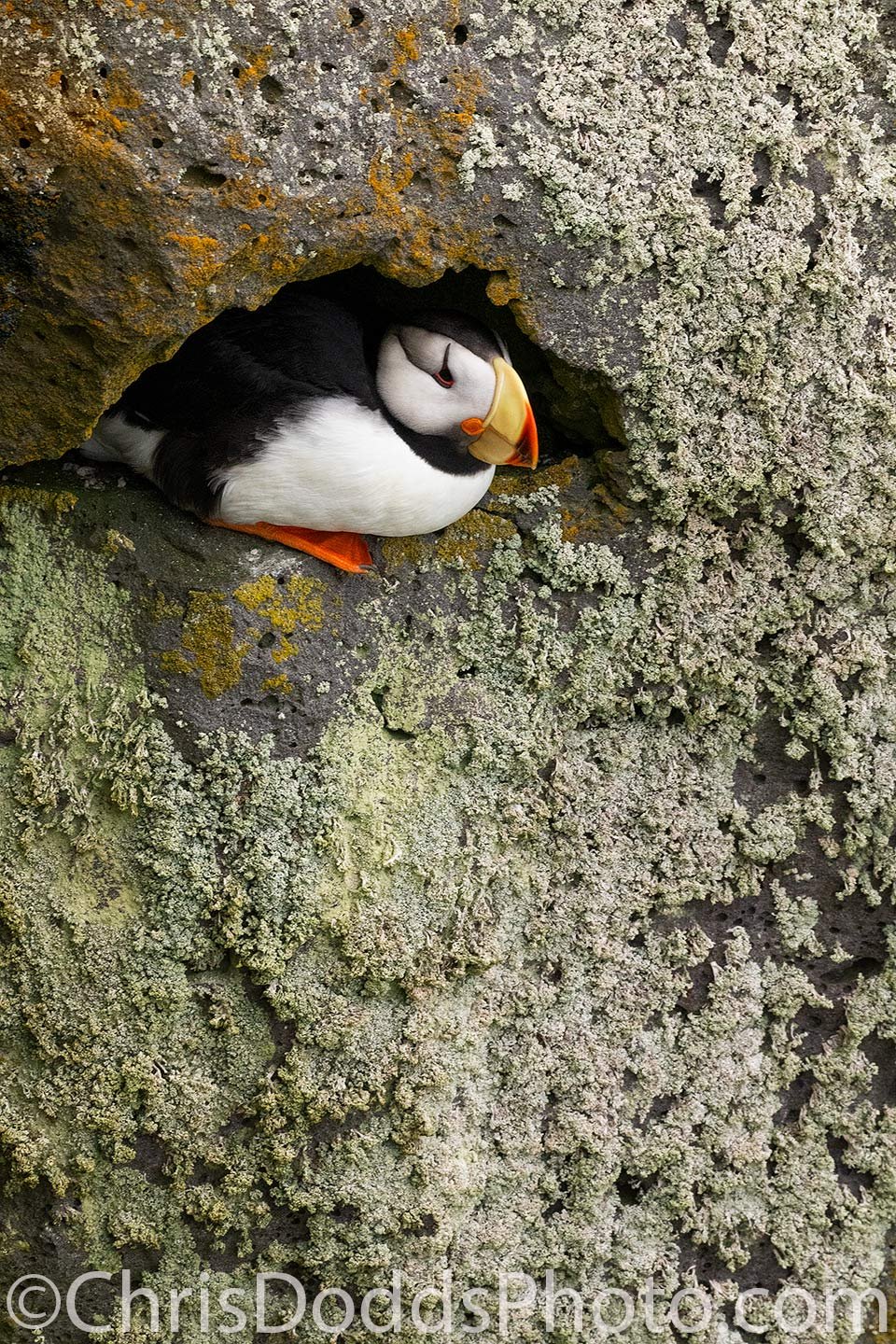
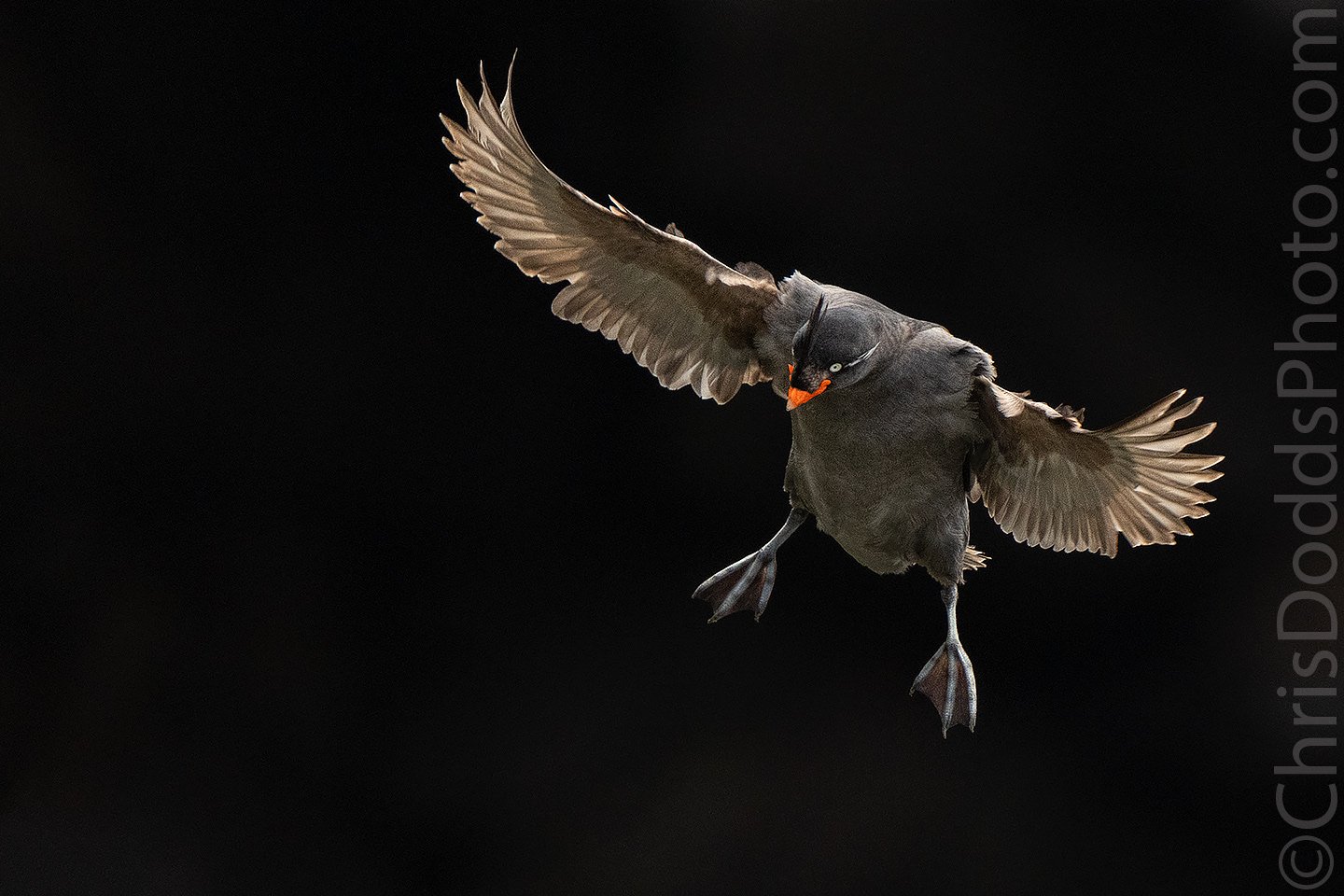
Extraordinary access to one of North America's great seabird colonies. We can photograph Tufted Puffins, Horned Puffins, Crested Auklets, Parakeet Auklets, Least Auklets, Red-faced Cormorants, and many other sought-after seabirds at remarkably close range.
Limited to just 10 photographers. The small group allows plenty of individual attention, hands-on assistance, and one-on-one coaching throughout the tour.
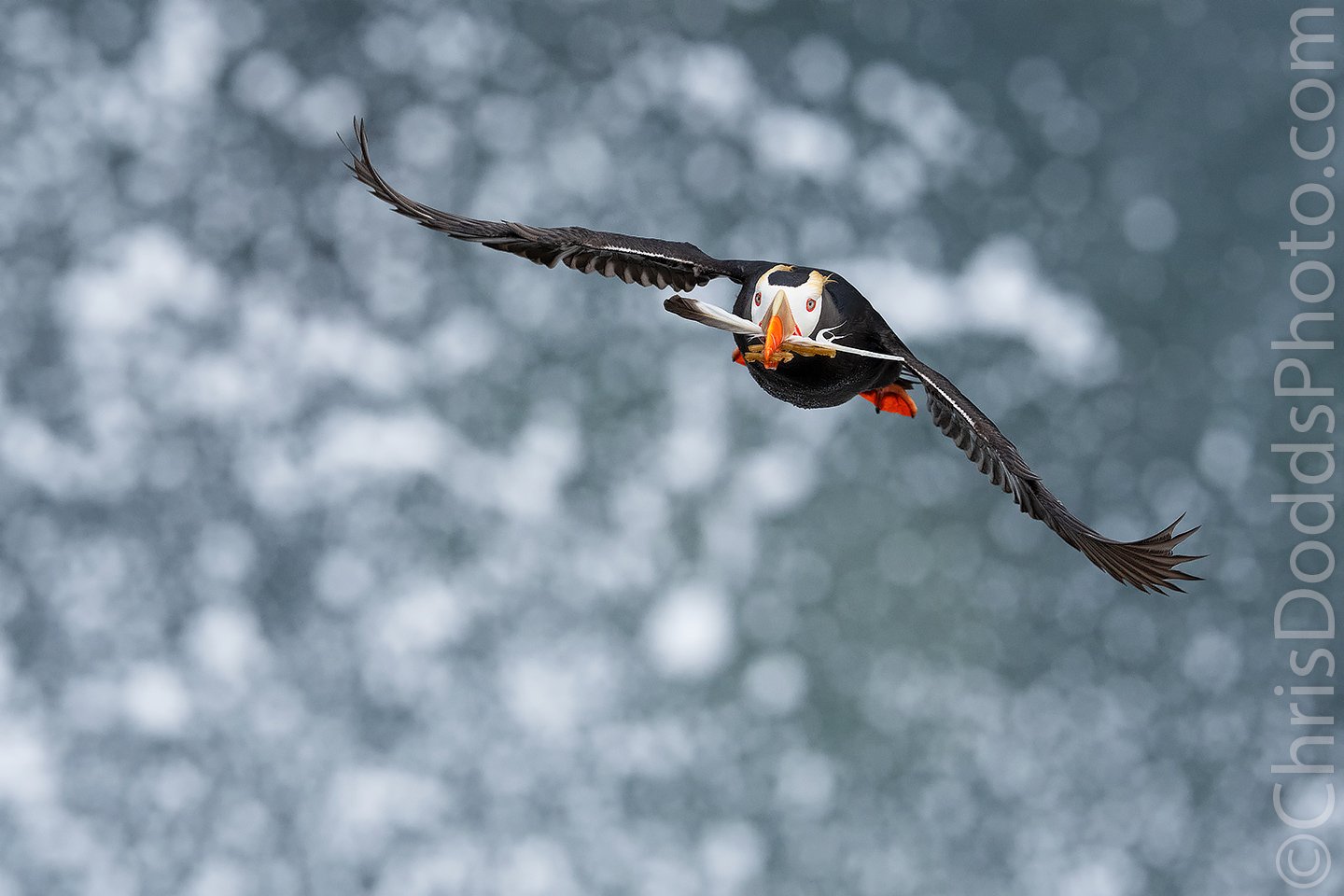
Bring a versatile range of focal lengths. Saint Paul offers everything from remarkably close encounters and birds in flight to more distant subjects and environmental compositions. Lenses covering roughly 70–200mm, 100–400mm, 200–600mm, or similar ranges are all useful. A 500mm or 600mm super-telephoto can certainly be valuable, but you do not need a huge super-telephoto lens to come home with an exceptional and diverse portfolio.
Photographers of all experience levels are welcome. Whether you're an experienced wildlife photographer or still mastering your camera, instruction is adapted to your individual needs, experience, and goals.
All camera brands are welcome. My 40+ years as a professional photographer include extensive real-world experience with Sony, Canon, Nikon, OM System, Leica and Hasselblad cameras and lenses. Whatever system you bring to Saint Paul Island, the brand on the front of your camera isn't important. What matters is helping you understand your equipment, get the most from it and consistently make better photographs.
Experience matters on Saint Paul Island. I have led more than 35 photography workshops on Saint Paul Island over the years and know the island, its wildlife, its changing conditions, and its photographic opportunities intimately.







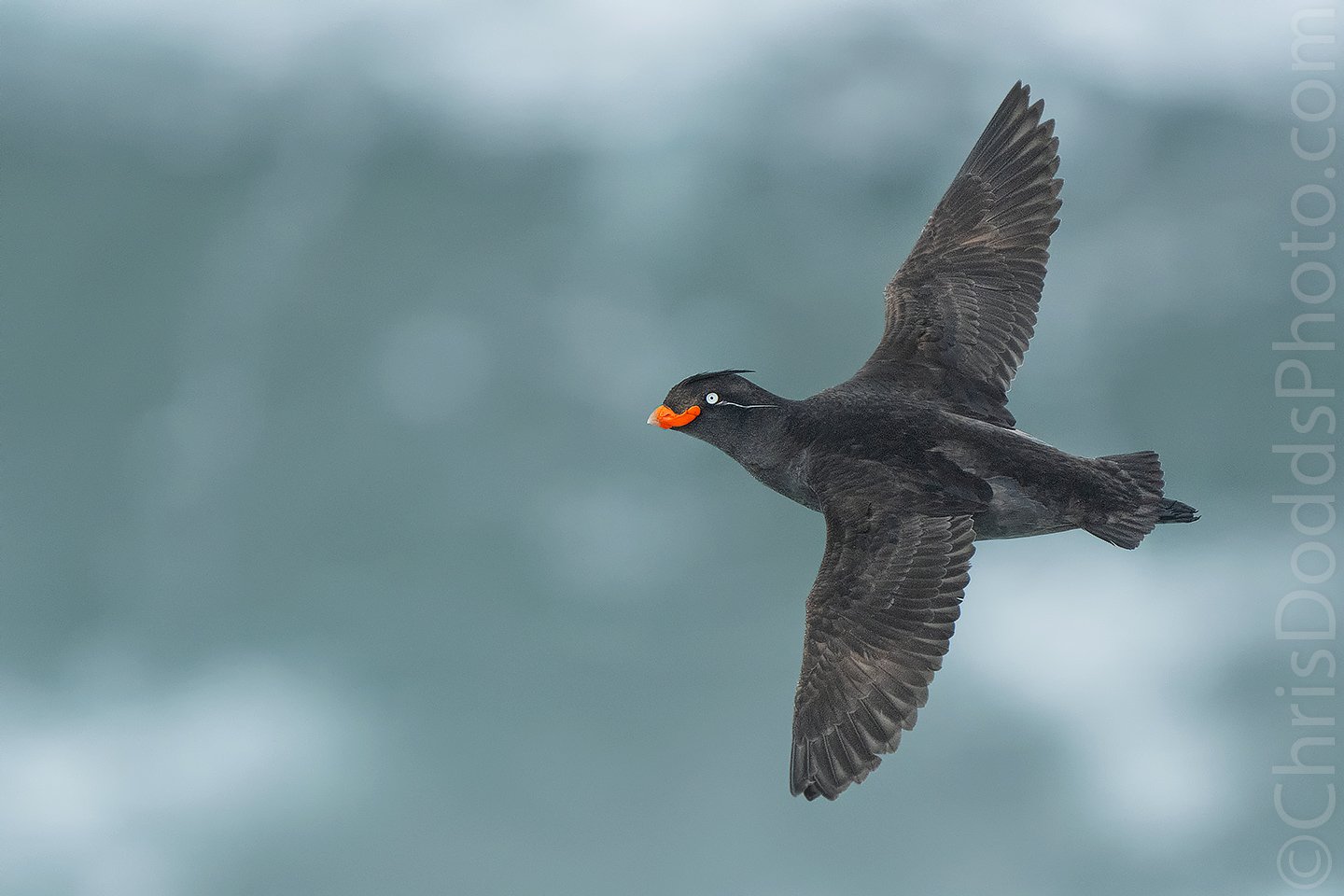
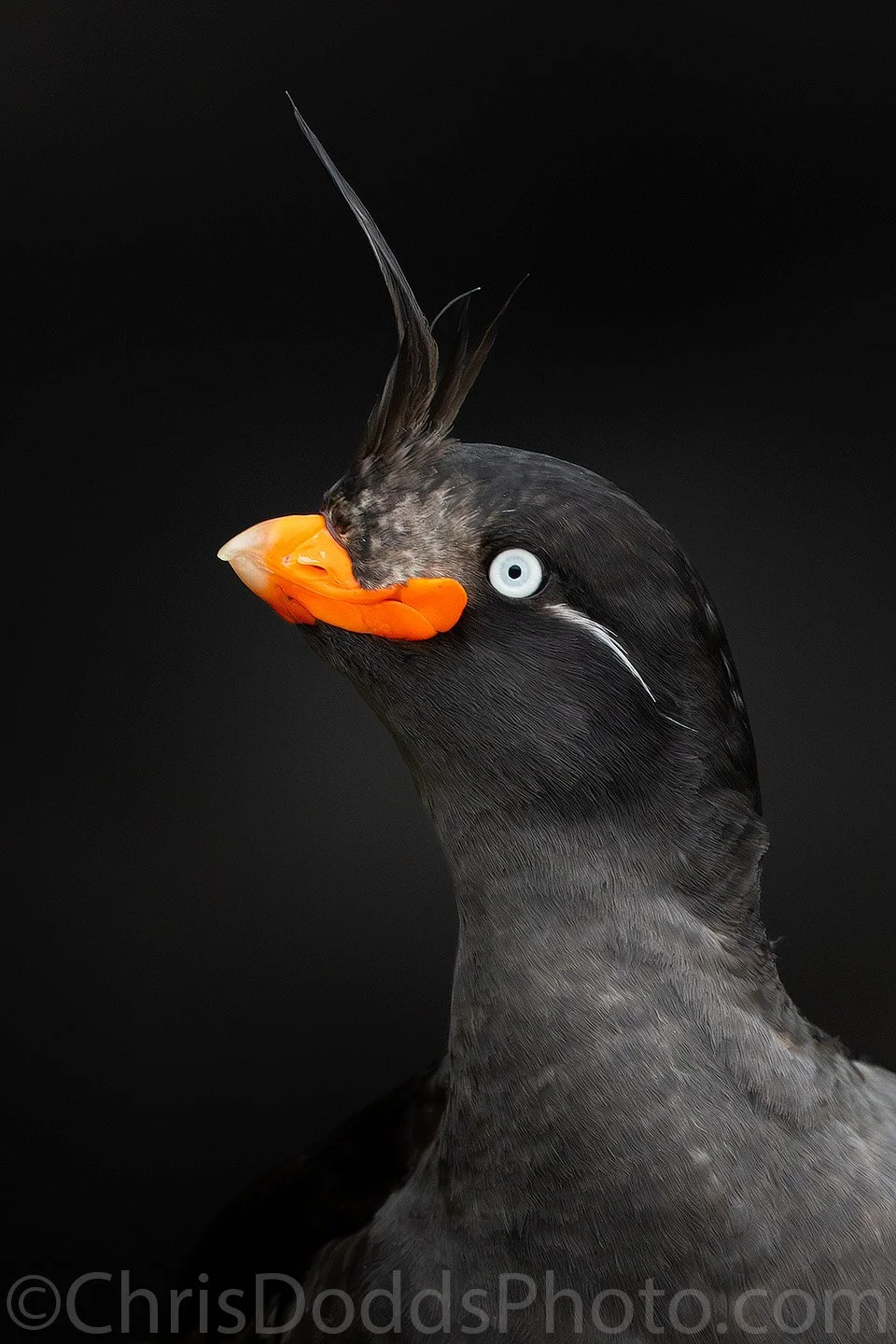
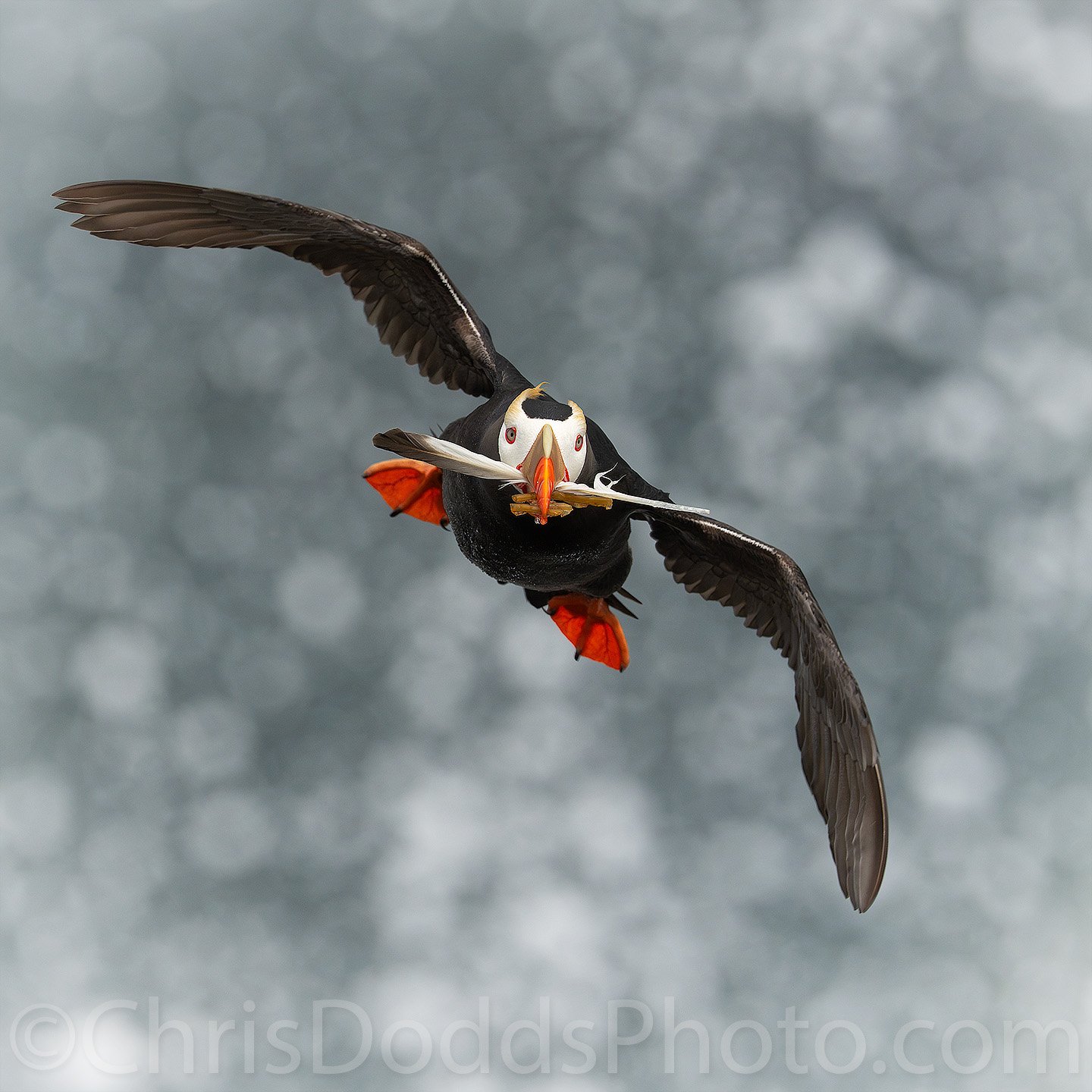
Photograph the Wild Heart of Alaska's Pribilof Islands
Saint Paul Island is the largest of the four volcanic Pribilof Islands rising from the middle of the Bering Sea between Alaska and Russia. Remote, windswept and extraordinarily wild, it is one of those increasingly rare places where you can sit quietly at the edge of the Bering Sea, surrounded by thousands of seabirds, and watch them stream past for hours with virtually no sign of the outside world.
For a wildlife photographer, it is an extraordinary place.
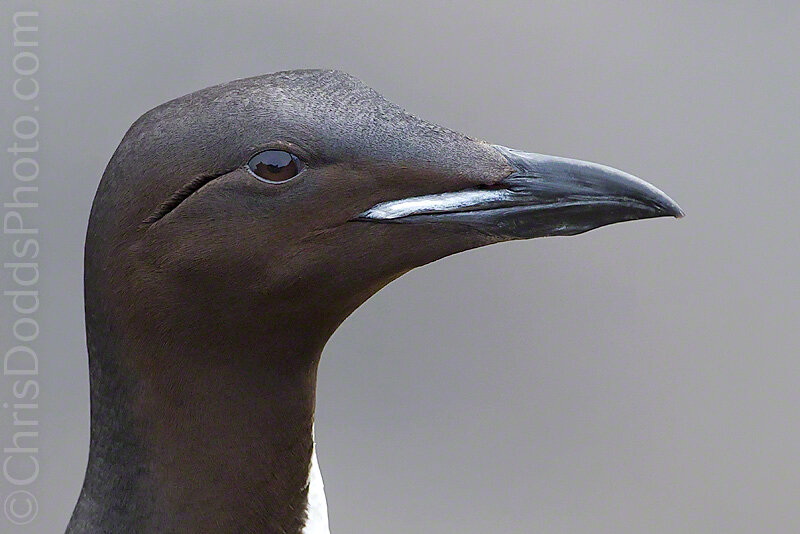
The towering sea cliffs of Saint Paul support immense colonies of nesting seabirds. Horned and Tufted Puffins, Least, Crested and Parakeet Auklets, Red-faced Cormorants, Red-legged and Black-legged Kittiwakes, Northern Fulmars, Thick-billed and Common Murres, and Glaucous-winged Gulls are among the species we will seek and photograph.
Away from the cliffs, the tundra offers an entirely different range of photographic opportunities. Snow Buntings, Lapland Longspurs, Ruddy Turnstones, Rock Sandpipers and the island's distinctive Grey-crowned Rosy-Finches are among the breeding birds we may encounter, while Saint Paul's isolated location in the middle of the Bering Sea gives us the exciting possibility of unexpected migrants and rarities.
And then there are the mammals.
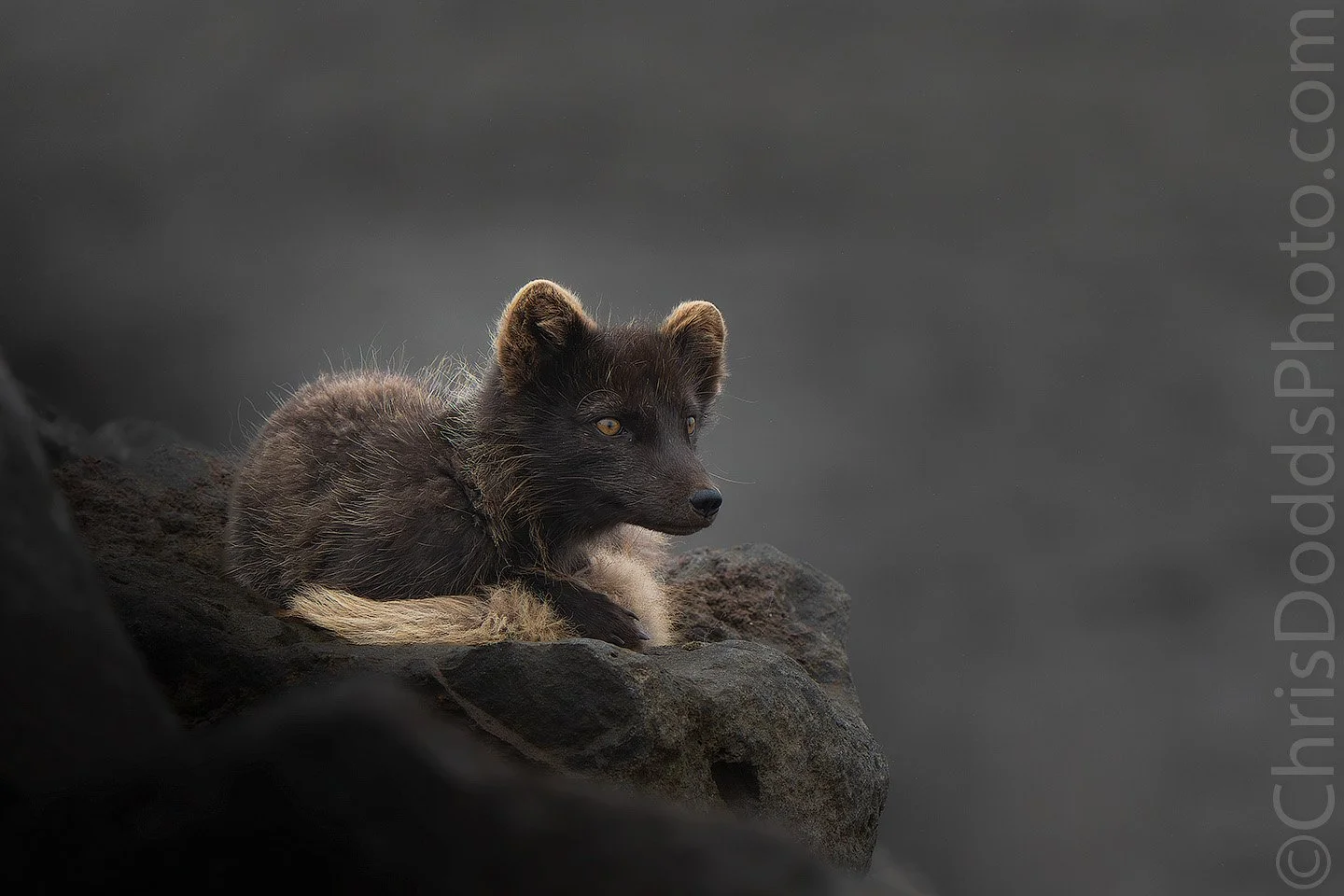
Saint Paul is home to one of the world's great concentrations of Northern Fur Seals, and we will have opportunities for safe, responsible photography from designated viewing areas and blinds. Arctic foxes — including Saint Paul's distinctive blue colour morph — and reindeer add still more possibilities to an already remarkable wildlife experience.
Seven Full Days in the Field
This is first and foremost a photography tour.
We have travelled far too far to Saint Paul Island to spend our days sitting indoors watching presentations or working on computers. Our classroom is the island itself.
Our seven full days will be long, flexible and centred around photography. We will divide our time among seabird cliffs, auklet colonies, tundra, shorebirds, songbirds and Northern Fur Seals, continually adapting to the weather, light and wildlife activity.
Rather than following a rigid photographic schedule, we go where the best opportunities are.
Our dedicated transportation, world-class bird guide and permitted access are important parts of that flexibility. If the light changes, the wind shifts, a rarity appears or a particular location suddenly becomes productive, we can respond. That freedom is especially valuable on an island where Bering Sea weather and photographic conditions can change remarkably quickly.
Experience Matters on Saint Paul
I have visited and led photography groups on Saint Paul Island more than 35 times, photographing the island from spring through summer and learning how dramatically its opportunities change with the season, weather, wind and light.
That experience matters.
Knowing where to go is only part of it. Knowing when to be there — where the light will fall, how the wind will affect birds in flight, where particular species are most productive and when conditions suggest moving to another location — can make the difference between simply seeing a bird and creating an exceptional photograph of it.
The July 1–8 dates have been deliberately selected from that experience. Early July consistently offers an outstanding combination of nesting activity, species diversity and birds in beautiful breeding plumage.
Personalized Instruction — Right Beside You
My teaching happens where it matters most: in the field, with your camera in your hands and the subject in front of you.
I will be there to help with camera setup, autofocus, exposure, composition, anticipating behaviour, flight photography, working with changing backgrounds and light, and developing the ability to recognize an opportunity before it disappears.
There are no secrets and nothing held back. I share the same techniques, thought processes and field strategies that I use every day in my own professional wildlife photography.
And instruction is never one-size-fits-all.
If you're relatively new to wildlife photography, I'll help you understand your equipment and build the fundamentals that lead to consistent results. If you're already an accomplished photographer, we can concentrate on the subtleties — light, backgrounds, behaviour, timing, composition and refining your personal style.
Photographers of every experience level and every camera brand are welcome.
My 40+ years as a professional photographer include extensive real-world experience with Sony, Canon, Nikon, OM System, Leica and Hasselblad cameras and lenses. Whatever system you bring to Saint Paul Island, the brand on the front of your camera isn't important. What matters is helping you understand your equipment, get the most from it and consistently make better photographs.
Small Group. Extraordinary Access.
The group is strictly limited to 10 photographers.
Keeping the group small gives everyone room to work, minimizes our impact on the wildlife and, most importantly, allows me to spend meaningful one-on-one time with each photographer.
Our group will also be accompanied by a world-class bird guide with intimate knowledge of Saint Paul's birds, wildlife and natural history. Combining that expertise with my decades of photographic experience on the island gives us an enormous advantage: we can concentrate on finding the best subjects while putting ourselves in the best possible position to photograph them.
We are fully permitted for appropriate access to photograph and experience Saint Paul's extraordinary natural areas and wildlife, allowing us to make the most of the opportunities the island offers while respecting its regulations and protecting the birds, mammals and habitats that make it so special.
You Don't Need a Giant Lens
Saint Paul doesn't require everyone to arrive carrying an enormous 600mm prime.
The extraordinary proximity of many subjects means a surprisingly broad selection of lenses can be productive. 70–200mm, 100–400mm, 200–600mm and similar zooms are all extremely useful, while 500mm and 600mm lenses can be excellent for more distant subjects, portraits and flight photography.
Bring a wide-angle or standard zoom, too.
Saint Paul isn't only about filling the frame with birds. The Bering Sea, tundra, cliffs, dramatic weather and enormous colonies offer wonderful opportunities to create environmental wildlife images and photographs that tell the story of this remarkable place.
What's Included
Your 8-day / 7-night Saint Paul Island Photography Tour includes:
7 nights' accommodation on Saint Paul Island
Meals while on Saint Paul Island
Dedicated ground transportation for our group
Seven full days of professional, personalized, in-the-field photography instruction with Christopher Dodds
A world-class bird guide dedicated to our group
Professional local birding, wildlife and natural-history expertise
Permitted access to Saint Paul's extraordinary natural areas and wildlife photography opportunities
Northern Fur Seal viewing and photography opportunities from authorized areas and blinds
Complete on-island photographic logistics and tour management
A reserved block of seats for our group on the flights between Anchorage and Saint Paul Island (airfare is not included)
Our combination of dedicated transportation, professional photographic instruction, expert bird guiding and permitted access means our days can revolve around one thing: making the most of the very best photographic opportunities Saint Paul Island gives us.
Anchorage–Saint Paul Flights
A block of seats has been reserved for our group on the flights between Anchorage (ANC) and Saint Paul Island (SNP).
This is an important part of the logistics for such a remote destination. Although your airfare is not included in the tour price, you will not simply be left on your own to figure out how to get to the island. Registered participants will receive the information and instructions needed to secure their seat from our reserved group allocation.
As with all travel to a remote Bering Sea island, flights remain subject to airline operations and weather conditions.
Transportation to and from Anchorage, airfare between Anchorage and Saint Paul Island, alcoholic beverages, souvenirs, gratuities and expenses of a personal nature are not included in the tour price.
Who Should Attend?
Anyone who loves birds, wildlife and photography.
You might be relatively new to wildlife photography and looking for hands-on help. You might be an experienced enthusiast wanting to improve your flight photography, exposure and ability to work with light. Or you might be a seasoned professional who simply wants the logistics, access and benefit of decades of Saint Paul Island experience handled for you.
The experienced photographer can concentrate entirely on photography while taking advantage of our access, logistics, bird guide, transportation and my extensive site and subject knowledge. The less-experienced photographer gets all of those advantages plus as much hands-on photographic instruction as needed.
You don't have to be an expert. You just need to love photography, wildlife and being outside with your camera.
Getting There
Our adventure begins at Ted Stevens Anchorage International Airport (ANC) in Anchorage, Alaska.
Participants are responsible for travelling to Anchorage and for purchasing their round-trip flight between Anchorage and Saint Paul Island.
We have reserved a block of seats for our group on the Anchorage–Saint Paul flights, and registered participants will receive the information necessary to secure their seats.
Because travel to Saint Paul crosses hundreds of miles of the Bering Sea and can be affected by weather and airline operations, I strongly recommend allowing appropriate flexibility in your travel plans. Detailed recommendations for arrival and departure timing, along with Anchorage hotel suggestions, will be provided after registration.
Once You're Registered
You won't be left wondering what to bring or how to prepare.
Registered participants will receive detailed pre-tour information covering travel logistics, our reserved Saint Paul flight arrangements, recommended Anchorage accommodations, camera and lens suggestions, a field-tested clothing checklist, packing advice and everything else you need to arrive properly prepared for photography on Saint Paul Island.
SIGN ME UP!
Ready to photograph one of the most extraordinary seabird destinations on Earth?
Join internationally renowned Canadian wildlife photographer and photographic educator Christopher Dodds for eight days and seven nights on remote Saint Paul Island in Alaska's Bering Sea. With 40+ years behind the lens and more than 35 photography trips to Saint Paul Island, Chris brings an extraordinary depth of experience, personalized in-the-field instruction and intimate knowledge of this remarkable destination.
Limited to just 10 photographers — July 1–8, 2027.
Complete the form below to reserve your place for an unforgettable photographic adventure in the wild heart of the Bering Sea.
“I found Chris via the strong images on his web site.
Having now taken two of his photo workshops, I have seen a significant improvement in my images due to improved capture and post processing techniques. Having taken many other wildlife photo workshops, Chris stands out for his top notch instruction. His workshops provide many excellent photo opportunities.
If you are serious about your photography and want to get better, Chris can help you in many ways. He is willing and able to explain what he is doing and why he is doing it. He emphasizes not only the vision but also the execution in the field and the post processing.
It was fun shooting with and learning from Chris. I give a hearty recommendation to anyone considering a photo workshop with Chris, a recommendation I plan to follow.”
— Carl Zanoni Connecticut, USA
“As an experienced wildlife & landscape photographer I would highly recommend you attend one of Chris Dodds' workshops - I have attended a number of Chris' workshops and each of them reflect Chris' caring. I just attended the St. Paul, Alaska workshop - typical of Chris' professionalism, and expertise. He only takes you to those unique shooting opportunities when he is convinced that the shoot will provide you the experience you are seeking. In the Saint Paul Island workshop's case he has visited this unique special remote island for over 25 years. The local small population obviously respects Chris and they do all they can to assist the experience. You shoot from a variety of locations, with many types of birds, complimented by wild fox, sea lions etc. Chris has the talent to assist both experienced and novice photographers - he makes sure you get the opportunities you want, and if you need extra help he enjoys jumping in and helping you. If you had to summarize Chris' workshops in a few words - Great well researched locations, tremendous local knowledge, dedicate to your photographic results being all you could possibly want.”
— Wynne Powell British Columbia, Canada
“My truest feelings for my St. Paul experiences were self-expressed spontaneously and subconsciously when, as our plane taxied down the runway on our return home, I choked up at the thought that our unique week together was over. Special thanks go to you, Chris, for your special help: giving me physical support to deal with the slipperies in the early days before I developed my sea-legs, directing me to good spots for close-up photos, helping me get into and out of them as needed, and especially for your converting me to use the Manual setting for my exposures. The true value of the latter became evident as I scanned my photo results on the computer. I confess I was plenty tired physically at the end of our week, but it was a week that in retrospect I would not have missed.”
— Charles Wyttenback Cape Cod | Massachusetts | USA